
Retatrutide: Triple-Agonist Research Compound Overview
A structural and mechanistic overview of the GLP-1/GIP/glucagon triple-receptor agonist, and the metabolic, hepatic, and structural research domains it has been studied in.
For Research Use Only — Not for human or veterinary use.
You must be 21 years of age or older to enter this site. By entering, you confirm that you are 21 or older, and that any products purchased will be used solely for laboratory research purposes — not for human or veterinary consumption, diagnostic, or therapeutic use.
A research overview of the tuftsin-derived heptapeptide Selank, its proposed enkephalinase-inhibition mechanism, and the anxiolytic, stress-model, and human neuroimaging research domains it has been studied in.
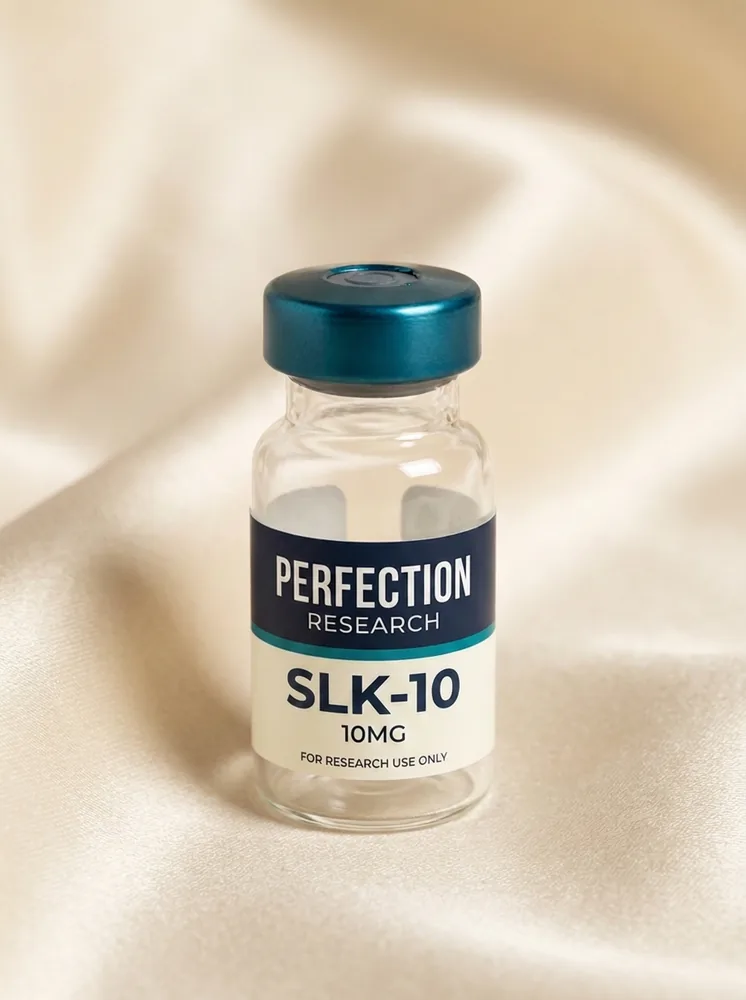
All content on this page is for laboratory and academic reference only. This compound is supplied under a Research Use Only framework for in vitro and preclinical investigation by qualified personnel. Nothing on this page is clinical guidance, and it should not be interpreted as instructions for use in humans or animals.
Selank is a synthetic heptapeptide with the sequence Thr-Lys-Pro-Arg-Pro-Gly-Pro, developed by extending tuftsin — a naturally occurring immune-signaling tetrapeptide — with a C-terminal Pro-Gly-Pro sequence to improve metabolic stability. Like Semax, it was developed within a Russian neuropharmacology research program, and has been studied primarily in anxiolytic and cognitive-modulation research contexts, distinct from tuftsin's original immunological research role.[2]
The mechanism most reported for Selank involves inhibition of enkephalinases — enzymes responsible for breaking down endogenous enkephalins, the body's own opioid-like signaling peptides. In vitro work reported Selank dose-dependently inhibiting enzymatic hydrolysis of plasma enkephalin, proposed as the mechanistic basis for its studied anxiolytic activity by preserving endogenous enkephalin tone.[1] Separately, Selank has been described in the literature as a positive allosteric modulator relevant to GABA signaling and as having effects on BDNF expression, positioning it within a broader neuromodulatory research profile alongside its enkephalinase-inhibition mechanism.
Selank is frequently discussed alongside Semax, another ACTH/tuftsin-lineage heptapeptide from the same Russian neuropharmacology research tradition, and the two have been jointly studied in human neuroimaging research.[4] Selank's literature emphasizes anxiolytic and enkephalinase-inhibition mechanisms, while Semax's literature emphasizes BDNF-linked neuroprotective and cognitive-recovery research — see the SMX-10 product page for the related compound.
A Certificate of Analysis for an SLK-10 research vial should report, at minimum: confirmed amino acid sequence (typically via mass spectrometry) and net peptide content. Vials should be stored lyophilized at -20°C, protected from light, consistent with handling guidance for the other lyophilized peptides in this catalog.
Selank is a synthetic heptapeptide derived by extending tuftsin, a naturally occurring immune-signaling tetrapeptide, with a stability-enhancing Pro-Gly-Pro sequence.[2]
Research centers on inhibition of enkephalin-degrading enzymes, proposed to preserve endogenous enkephalin levels and underlie Selank's studied anxiolytic activity.[1]
Yes. A clinical study compared Selank to the benzodiazepine medazepam in generalized anxiety disorder and neurasthenia, reporting similar anxiolytic effects.[2]
The two are related heptapeptides from the same Russian neuropharmacology research lineage, jointly studied in human neuroimaging research, though their literature emphasizes different research domains (anxiolytic/enkephalinase-inhibition for Selank, BDNF-linked neuroprotection for Semax).[4]
A COA for an SLK-10 research vial should report confirmed amino acid sequence and net peptide content, consistent with the documentation standard used across this catalog.
No. SLK-10 is supplied strictly under a Research Use Only framework for laboratory and preclinical investigation, and none of the studies referenced here involve clinical administration guidance outside their own regulated trial protocols.
A structural and mechanistic overview of the GLP-1/GIP/glucagon triple-receptor agonist, and the metabolic, hepatic, and structural research domains it has been studied in.

A research overview of the gastric-derived pentadecapeptide BPC-157, its proposed VEGFR2/angiogenesis and growth-hormone-receptor mechanisms, and the tissue-repair, GI, and neurological research domains where it has been studied.

Chemistry, proposed mechanism, and the research domains — cardiac, ophthalmic, and general tissue repair — where the Thymosin Beta-4 fragment appears most in the literature.