Retatrutide: Triple-Agonist Research Compound Overview
A structural and mechanistic overview of the GLP-1/GIP/glucagon triple-receptor agonist, and the metabolic, hepatic, and structural research domains it has been studied in.
For Research Use Only — Not for human or veterinary use.
You must be 21 years of age or older to enter this site. By entering, you confirm that you are 21 or older, and that any products purchased will be used solely for laboratory research purposes — not for human or veterinary consumption, diagnostic, or therapeutic use.
A research overview of NAD+ as a redox coenzyme and sirtuin cofactor, its age-related decline, and the pharmacokinetic and mitochondrial-function research domains it has been studied in.
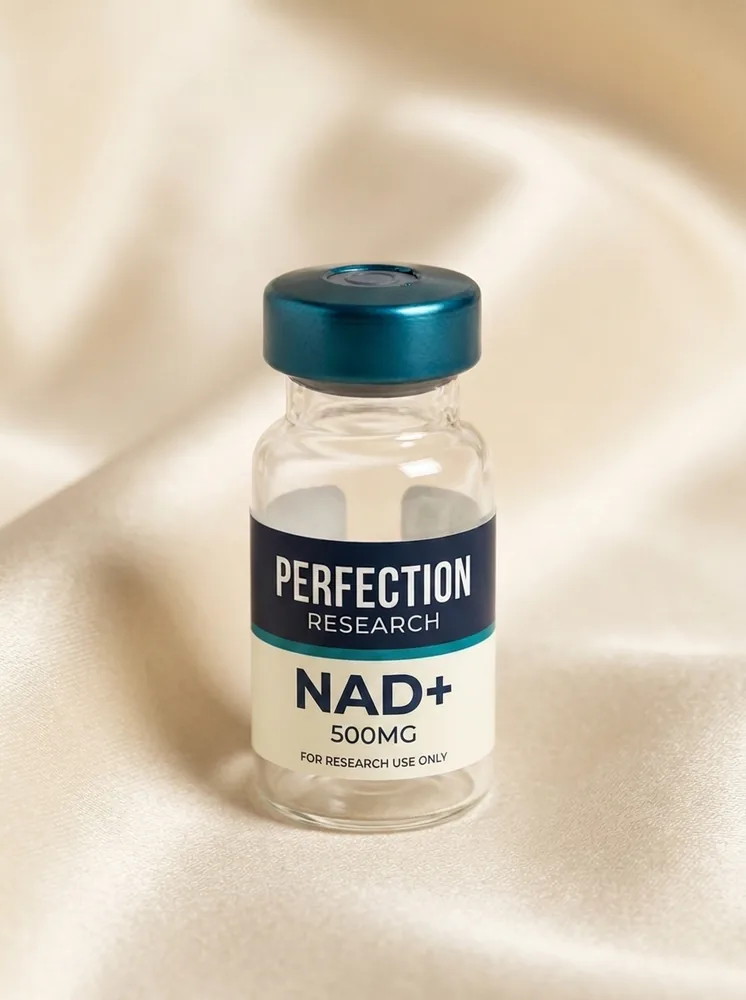
All content on this page is for laboratory and academic reference only. This compound is supplied under a Research Use Only framework for in vitro and preclinical investigation by qualified personnel. Nothing on this page is clinical guidance, and it should not be interpreted as instructions for use in humans or animals.
NAD+ (nicotinamide adenine dinucleotide) is a coenzyme found in every living cell, central to the redox reactions that drive cellular energy metabolism. Beyond its redox role, NAD+ also functions as an essential cofactor for a set of non-redox enzymes, including sirtuins, CD38, and poly(ADP-ribose) polymerases (PARPs) — enzyme families studied extensively in aging and cellular-stress research.[1]
The mechanism most associated with NAD+ in longevity research runs through sirtuins, a family of proteins that couple NAD+ breakdown to protein deacylation (the removal of chemical groups from proteins that regulate their activity). This coupling is proposed as the mechanistic bridge that translates cellular energy metabolism into downstream effects on aging and longevity pathways studied across model organisms.[2] Because NAD+ has limited direct cell permeability, pharmacokinetic research distinguishes between two study approaches: direct NAD+ administration, and oral supplementation with NAD+ precursor molecules such as nicotinamide riboside (NR), which are separately metabolized into NAD+ within cells. A pilot study of intravenous NAD+ infusion in humans found the compound was rapidly cleared from plasma within the first two hours post-infusion, with urinary metabolite patterns consistent with specific NAD+-processing enzyme activity.[3]
NAD+ is mechanistically distinct from the peptide compounds elsewhere in this catalog — it is a small-molecule coenzyme rather than an amino-acid chain, and its research basis centers on redox chemistry and sirtuin cofactor activity rather than receptor binding. Within its own research literature, an important distinction is direct NAD+ administration versus precursor supplementation (NR, NMN): the two are studied as pharmacokinetically distinct approaches to raising cellular NAD+ availability.
A Certificate of Analysis for an NAD+ research vial should report, at minimum: confirmed compound identity and net content (typically via mass spectrometry or HPLC-based methods appropriate to a small-molecule coenzyme rather than a peptide sequence). Vials should be stored lyophilized at -20°C, protected from light, consistent with handling guidance for the other lyophilized compounds in this catalog.
NAD+ is a coenzyme central to cellular redox reactions and energy metabolism, and also serves as a cofactor for non-redox enzymes including sirtuins.[1]
A pilot intravenous infusion study found NAD+ was rapidly cleared from plasma within the first two hours, with metabolite patterns consistent with specific NAD+-processing enzyme activity.[3]
NAD+ itself has limited direct cell permeability, so a separate line of research studies oral precursor compounds that are metabolized into NAD+ within cells — pharmacokinetically distinct from direct NAD+ administration.[4]
A COA for an NAD+ research vial should report confirmed compound identity and net content, using analytical methods appropriate to a small-molecule coenzyme.
No. NAD+ is supplied strictly under a Research Use Only framework for laboratory and preclinical investigation, and none of the studies referenced here involve clinical administration guidance outside their own regulated trial or pilot-study protocols.
A structural and mechanistic overview of the GLP-1/GIP/glucagon triple-receptor agonist, and the metabolic, hepatic, and structural research domains it has been studied in.
A research overview of the gastric-derived pentadecapeptide BPC-157, its proposed VEGFR2/angiogenesis and growth-hormone-receptor mechanisms, and the tissue-repair, GI, and neurological research domains where it has been studied.
Chemistry, proposed mechanism, and the research domains — cardiac, ophthalmic, and general tissue repair — where the Thymosin Beta-4 fragment appears most in the literature.