
Retatrutide: Triple-Agonist Research Compound Overview
A structural and mechanistic overview of the GLP-1/GIP/glucagon triple-receptor agonist, and the metabolic, hepatic, and structural research domains it has been studied in.
For Research Use Only — Not for human or veterinary use.
You must be 21 years of age or older to enter this site. By entering, you confirm that you are 21 or older, and that any products purchased will be used solely for laboratory research purposes — not for human or veterinary consumption, diagnostic, or therapeutic use.
A research overview of the synthetic cyclic alpha-MSH analog Melanotan II, its non-selective melanocortin-receptor mechanism, and the pigmentary, metabolic, and receptor-pharmacology research domains it has been studied in.
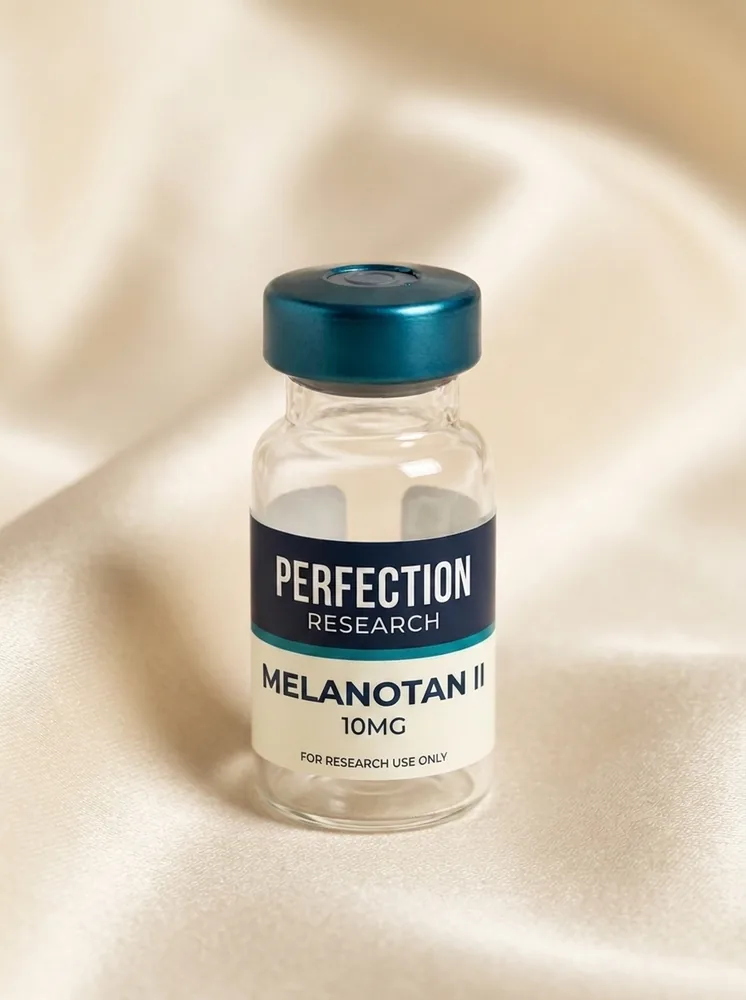
All content on this page is for laboratory and academic reference only. This compound is supplied under a Research Use Only framework for in vitro and preclinical investigation by qualified personnel. Nothing on this page is clinical guidance, and it should not be interpreted as instructions for use in humans or animals.
Melanotan II is a synthetic cyclic heptapeptide analog of alpha-melanocyte-stimulating hormone (alpha-MSH), a naturally occurring peptide hormone involved in pigmentation and several other physiological processes. Melanotan II retains the core 4-10 melanocortin receptor-binding region shared by alpha-MSH and adrenocorticotropic hormone, but is engineered with a lactam bridge that confers greater potency and metabolic stability than the natural hormone.[1]
Unlike receptor-selective compounds, Melanotan II is studied as a non-selective melanocortin-receptor agonist, activating MC1R, MC3R, MC4R, and MC5R subtypes rather than a single receptor target. This broad receptor activity is proposed to explain the range of effects reported across different research domains: MC1R activation is linked to pigmentation research, MC3R/MC4R activation to feeding and energy-balance research, and MC4R activation specifically to sexual-function research.[1] In rodent studies, intracerebroventricular administration of Melanotan II was reported to reduce the feeding-stimulating and fat-storage effects driven by neuropeptide Y (NPY), while leaving NPY's separate suppressive effects on reproductive and growth hormone axes unaffected — indicating pathway-specific rather than uniform interaction with NPY signaling.[2]
Melanotan II is mechanistically related to KPV, another alpha-MSH-derived research compound in this catalog, but the two are studied for opposite pharmacological properties: Melanotan II is a non-selective melanocortin-receptor agonist studied for its broad receptor-activating effects, while KPV is specifically studied for anti-inflammatory activity that is independent of melanocortin receptor binding. The two represent different research angles on the same parent hormone system.
A Certificate of Analysis for a Melanotan II research vial should report, at minimum: confirmed amino acid sequence (typically via mass spectrometry) and net peptide content. Vials should be stored lyophilized at -20°C, protected from light, consistent with handling guidance for the other lyophilized peptides in this catalog.
Melanotan II is a synthetic cyclic heptapeptide analog of alpha-MSH, engineered with a lactam bridge for greater potency and stability than the natural hormone.[1]
Melanotan II is a non-selective agonist across multiple melanocortin receptor subtypes (MC1R, MC3R, MC4R, MC5R), engineered for greater potency and metabolic stability than the natural hormone it is derived from.
Human research on Melanotan II's effects on sexual function informed the later development of bremelanotide, a more receptor-selective MC4R agonist studied separately in the literature.[3]
A COA for a Melanotan II research vial should report confirmed amino acid sequence and net peptide content, consistent with the documentation standard used across this catalog.
No. Melanotan II is supplied strictly under a Research Use Only framework for laboratory and preclinical investigation, and none of the studies referenced here involve clinical administration guidance.
A structural and mechanistic overview of the GLP-1/GIP/glucagon triple-receptor agonist, and the metabolic, hepatic, and structural research domains it has been studied in.

A research overview of the gastric-derived pentadecapeptide BPC-157, its proposed VEGFR2/angiogenesis and growth-hormone-receptor mechanisms, and the tissue-repair, GI, and neurological research domains where it has been studied.
Chemistry, proposed mechanism, and the research domains — cardiac, ophthalmic, and general tissue repair — where the Thymosin Beta-4 fragment appears most in the literature.