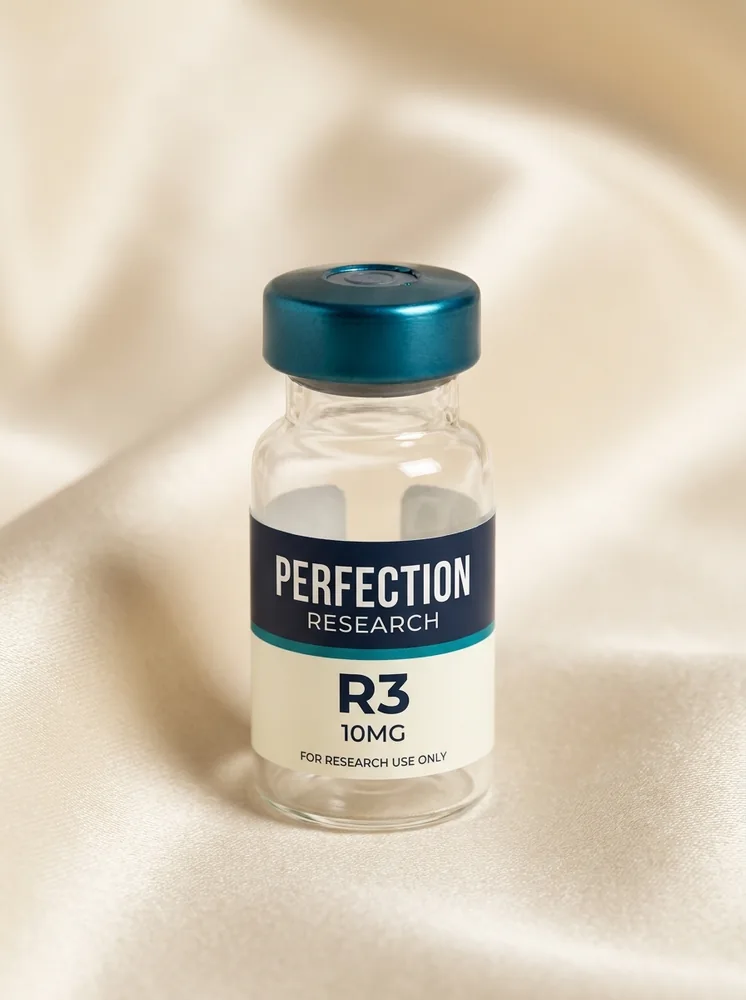
Retatrutide: Triple-Agonist Research Compound Overview
A structural and mechanistic overview of the GLP-1/GIP/glucagon triple-receptor agonist, and the metabolic, hepatic, and structural research domains it has been studied in.
For Research Use Only — Not for human or veterinary use.
You must be 21 years of age or older to enter this site. By entering, you confirm that you are 21 or older, and that any products purchased will be used solely for laboratory research purposes — not for human or veterinary consumption, diagnostic, or therapeutic use.
An overview of how the BPC-157, TB-500, and GHK-Cu blend in the Glow vial is composed, the individually published literature behind each component, and what combined-compound research formulations do and don't tell researchers.
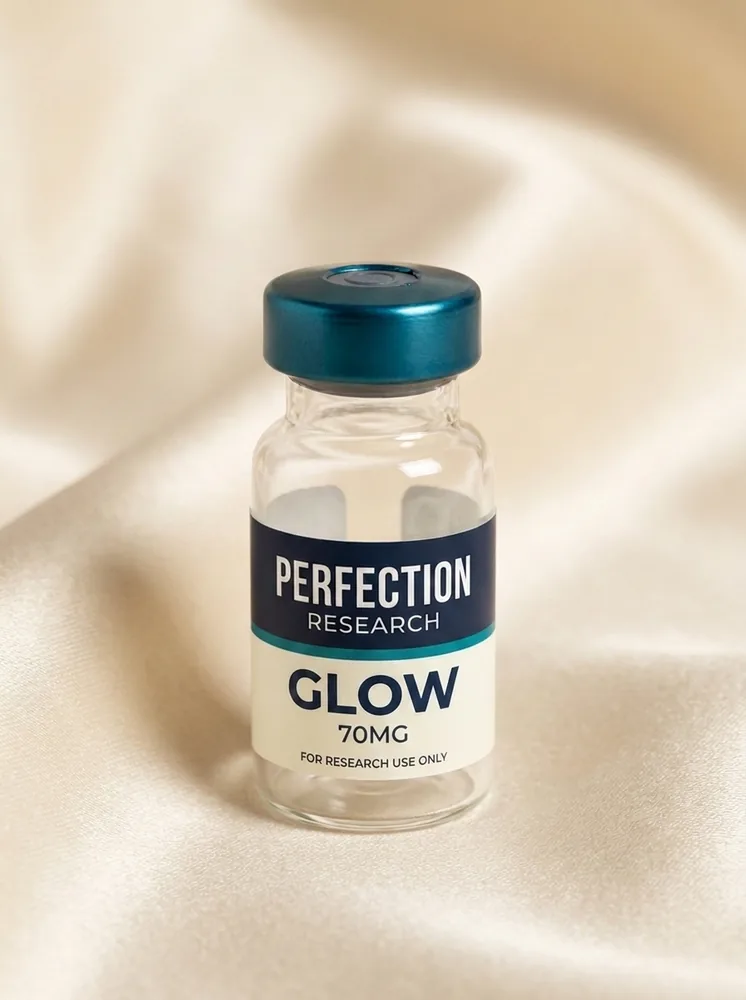
All content on this page is for laboratory and academic reference only. This compound is supplied under a Research Use Only framework for in vitro and preclinical investigation by qualified personnel. Nothing on this page is clinical guidance, and it should not be interpreted as instructions for use in humans or animals.
Glow is a multi-compound research vial combining three separately studied peptides: BPC-157, TB-500, and GHK-Cu. Unlike the single-compound products in this catalog, Glow is not itself the subject of a dedicated research literature — it is a formulation choice that brings together three compounds whose individual mechanisms researchers may want to study together, rather than a peptide with its own independently published pharmacology.
Because Glow is a combination product, there is no single mechanism to describe — instead, each component contributes a mechanistically distinct, separately published research pathway. BPC-157 is studied for VEGFR2 upregulation and downstream Akt-eNOS pathway activation promoting angiogenesis, alongside a separate growth-hormone-receptor pathway reported in tendon fibroblast models.[1] TB-500 acts through a distinct mechanism: G-actin sequestration via a short actin-binding domain, reported as necessary and sufficient for angiogenic effects in vitro — mechanistically separate from BPC-157's VEGFR2 pathway despite both being studied in angiogenesis research contexts.[2] GHK-Cu contributes a third, unrelated mechanism: its bound copper ion is studied as a cofactor for collagen cross-linking enzymes, alongside broader reported gene-expression effects.[3] Researchers combining these three compounds are therefore working with three independent, separately evidenced mechanisms rather than a single validated combined pathway.
Glow differs from this catalog's other combination product, the BPC-157 & TB-500 blend, by adding a third, mechanistically unrelated component (GHK-Cu) on top of the two tissue-repair-focused peptides. Researchers should treat each component's literature separately rather than assuming synergistic or additive effects have been formally studied — none of the citations below describe the three compounds administered together.
Glow product page → · BPC-157 product page → · BPC-157 & TB-500 product page → · GHK-Cu product page →
A Certificate of Analysis for a Glow research vial should report confirmed identity and net content for each of the three component compounds (BPC-157, TB-500, GHK-Cu) individually, since standard single-compound purity methods do not directly translate to a multi-compound formulation. Vials should be stored lyophilized at -20°C, protected from light, consistent with handling guidance for the other lyophilized compounds in this catalog.
Glow is a mix — a single vial combining three separately studied research peptides: BPC-157, TB-500, and GHK-Cu.
No. No published study has tested this specific three-compound combination as a formulation. All available research is on the individual components separately.
See the dedicated research articles for BPC-157, TB-500, and GHK-Cu on this blog, each of which lists its own independently verified PubMed citations.
A COA for a Glow research vial should report confirmed identity and net content for each of the three component compounds individually, since it is a multi-compound formulation rather than a single peptide.
No. Glow is supplied strictly under a Research Use Only framework for laboratory and preclinical investigation, and none of the studies referenced here involve clinical administration guidance.
A structural and mechanistic overview of the GLP-1/GIP/glucagon triple-receptor agonist, and the metabolic, hepatic, and structural research domains it has been studied in.
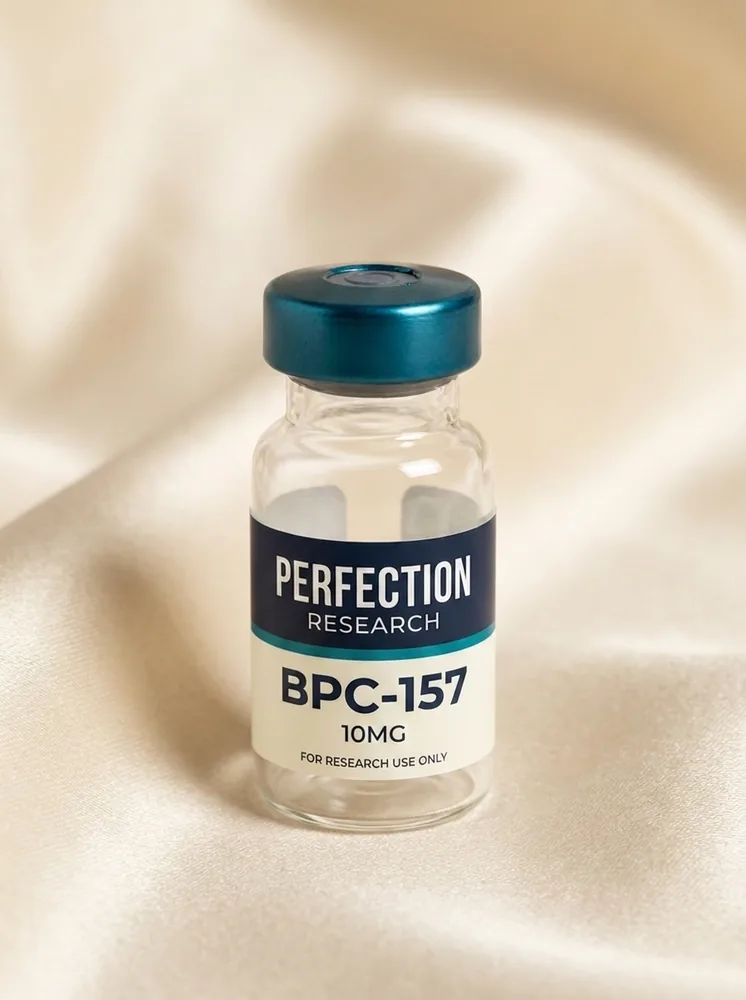
A research overview of the gastric-derived pentadecapeptide BPC-157, its proposed VEGFR2/angiogenesis and growth-hormone-receptor mechanisms, and the tissue-repair, GI, and neurological research domains where it has been studied.
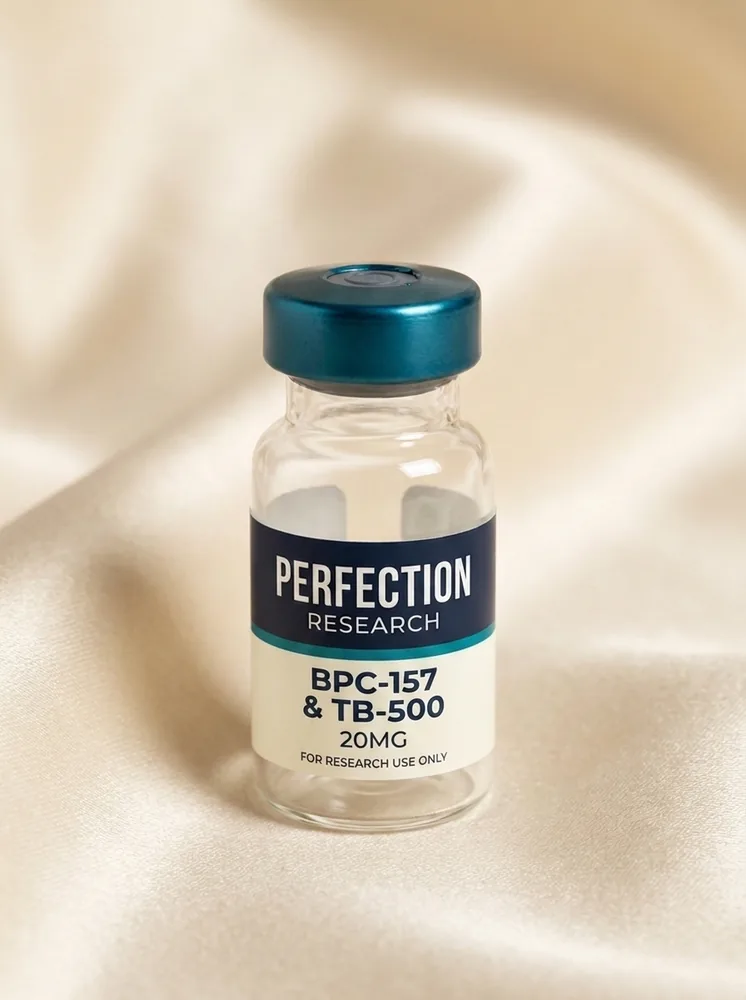
Chemistry, proposed mechanism, and the research domains — cardiac, ophthalmic, and general tissue repair — where the Thymosin Beta-4 fragment appears most in the literature.